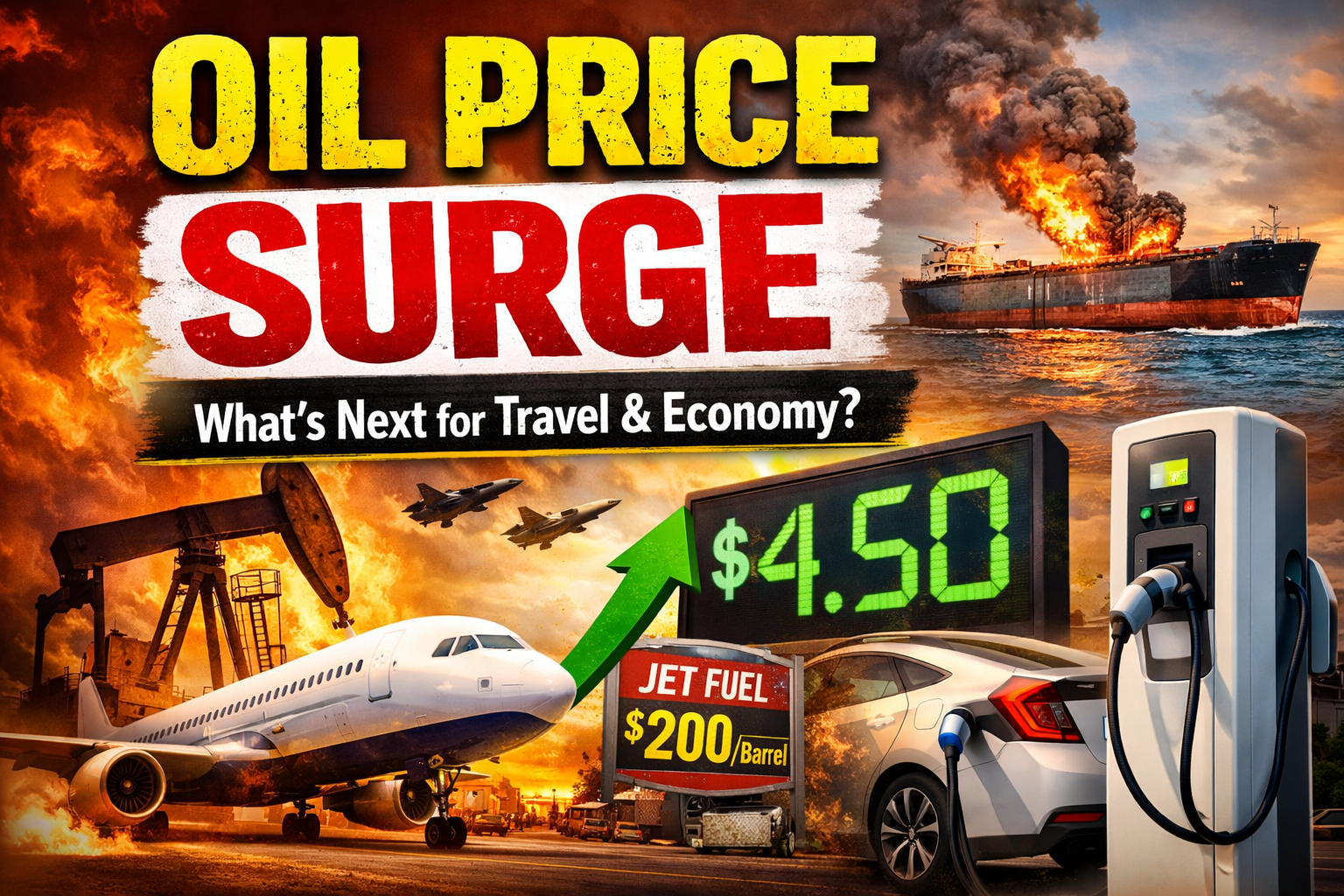

Oil Price Surge: What It Means for Travel, Economy, and the Future of Energy
The global oil market is once again under pressure, and prices are expected to rise sharply in the coming weeks. Growing tensions in the Middle East—especially involving Iran and the strategic Strait of Hormuz—are creating serious concerns about oil supply and global stability.
Rising Tensions Driving Oil Prices Up
Recent geopolitical developments have increased uncertainty in the energy market. Strong warnings from former U.S. President Donald Trump regarding Iran and the reopening of the Strait of Hormuz have added fuel to the situation. Any disruption in this critical oil route could significantly reduce global supply.
As a result, crude oil prices have already crossed the $100 per barrel mark. Experts now warn that if tensions continue, prices could surge further, potentially reaching between $150 and $200 per barrel.
Airlines and Travel Industry Under Pressure
The rising cost of oil is hitting the airline industry hard. Jet fuel prices have increased dramatically, nearing $200 per barrel. Airlines like United Airlines are expected to cut down flight schedules to manage operational costs.
For travelers, this means:
- Higher ticket prices
- Fewer flight options
- Increased travel expenses
In addition, freight and shipping costs are also expected to rise, impacting global trade and supply chains.
Global Economy Faces Major Impact
High oil prices don’t just affect travel—they impact entire economies. Countries in Asia and Australia are likely to feel the pressure the most, as they depend heavily on imported fuel.
Meanwhile, the United States may benefit from increased crude oil exports, thanks to strong domestic production. However, consumers worldwide could face financial strain. If gasoline prices rise beyond $4.50 per gallon, demand may start to drop significantly.
Supply Chain Disruptions and Market Uncertainty
The ongoing geopolitical tensions are also creating disruptions in oil supply chains. Delivery delays could extend up to 90 days, causing further instability in the market.
Additionally, the gap between actual crude oil prices and futures trading is making it harder for businesses to plan and manage costs effectively. This uncertainty is likely to keep prices volatile in the near future.
A Shift Toward Alternative Energy
With fuel prices rising, many industries and consumers are looking for alternatives. Electric vehicles (EVs) and renewable energy sources are gaining more attention as people search for cost-effective and sustainable solutions.
Airlines and other industries are also exploring new technologies and efficiency improvements to reduce their dependence on traditional fuels.
What Lies Ahead?
The future of the oil market remains uncertain. However, one thing is clear—global energy trends are changing. As prices rise and geopolitical tensions continue, both businesses and consumers will need to adapt quickly.
This situation may ultimately accelerate the transition toward cleaner energy and more efficient technologies worldwide.
Hashtags
#OilPrices #GlobalEconomy #MiddleEastTensions #FuelCrisis #AirlineIndustry #TravelCosts #EnergyCrisis #CrudeOil #Inflation #SupplyChain #ElectricVehicles #RenewableEnergy #OilMarket #EconomicImpact #WorldNews #EnergyTransition